Milton-Parc History
Indigenous Presence and the Early Territory
Before the neighbourhood came to be known as Milton-Parc, this territory formed part of lands travelled for centuries by Indigenous peoples, particularly the Haudenosaunee and the Anishinabeg. These nations lived in harmony with the waterways, hills, and forests that then occupied the northern slope of Mount Royal.
With the arrival of French colonization, the framework of the future neighbourhood gradually began to take shape, first through rural concessions, then through large properties owned by religious congregations and by Francophone and Anglophone elites.
The natural setting, at the edge of the mountain, quickly attracted educational institutions and bourgeois families, who built residences inspired by the Victorian style.
Urban and Architectural Development
Throughout the 19th century, Milton-Parc became an urban crossroads where religious institutions, expanding universities, and bourgeois residences coexisted. The arrival of McGill, followed by several colleges and convents, shaped not only the neighbourhood’s social fabric, but also its architecture.
Victorian row houses, adorned with dormers, cornices, and finely worked gables, bear witness to the refinement inherited from that period. Gradually, the grand residences were subdivided or converted into rental housing to accommodate a more diverse population, made up of artisans, workers, and immigrants.
This social mixing helped forge a distinctive identity, at once elegant and working-class, carried by an urban density at human scale.
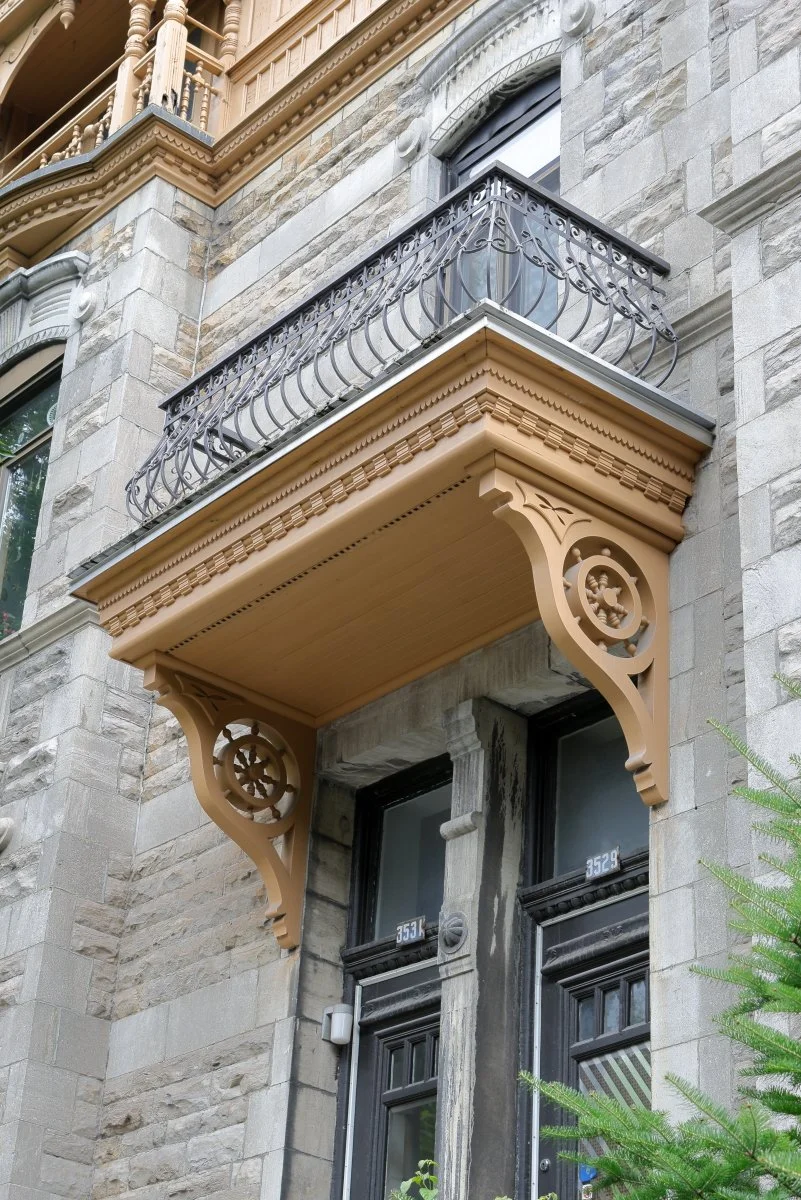
On Hutchison Street, a sculpted canopy watches over the doors like wooden lace frozen in time. At the threshold between ornament and memory, it evokes the golden age of Milton-Parc’s Victorian houses.
Grassroots Struggles and Heritage Preservation
In the 1970s, Milton-Parc became the site of a major grassroots mobilization. Threatened by real estate development projects that planned the demolition of several residential blocks, the neighbourhood found fierce defenders of its heritage among its own residents.
Tenants, students, families, and activists joined forces to create the largest non-profit housing cooperative in North America. This unprecedented movement slowed the expansion of developers and made it possible to preserve a unique architectural ensemble.
Thanks to this mobilization, old façades, finely crafted balconies, and tree-lined lanes remain today as living witnesses to an era that other neighbourhoods have seen disappear.
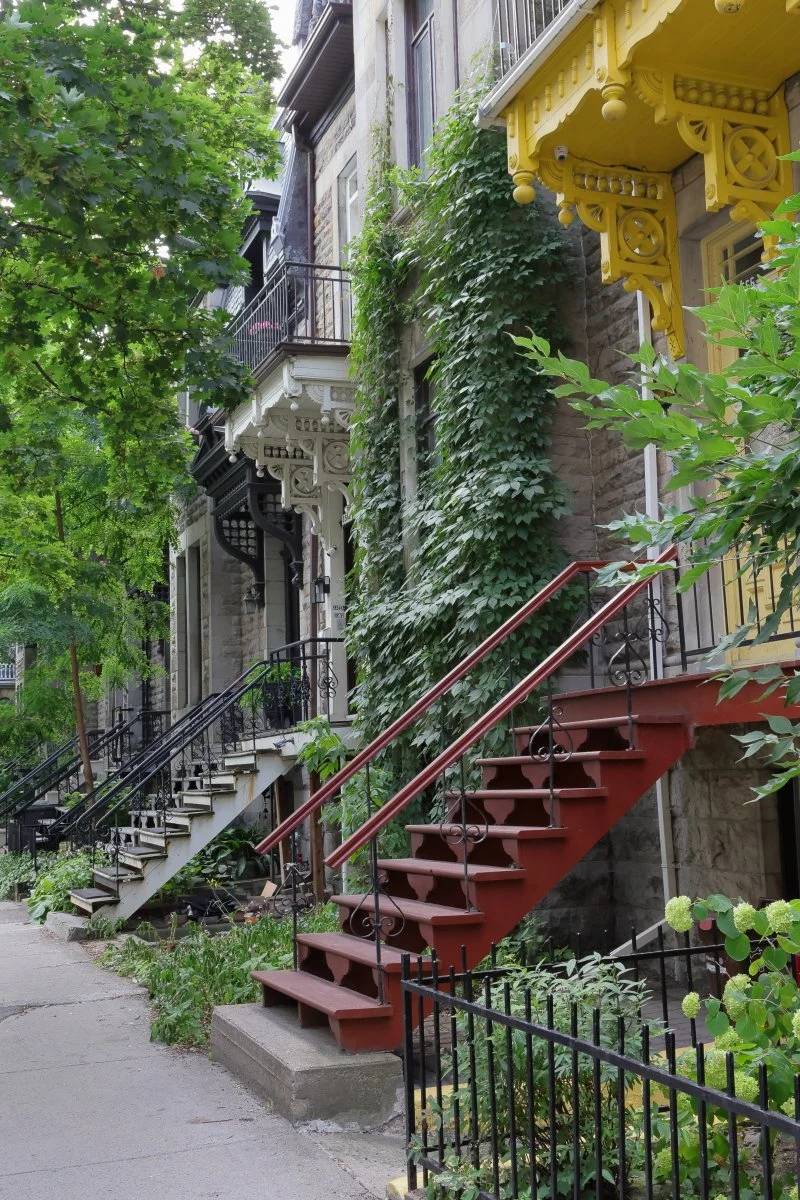
Exterior staircases trace an urban rhythm, halfway between the street and the intimacy of home. Each step, each flight carries the story of a neighbourhood where going upstairs feels like climbing into a Montreal novel.
Hutchison Street.
A Living Urban Identity
Today, Milton-Parc vibrates with neighbourhood life at human scale. People walk here often, and paths frequently cross. The immediate proximity of McGill University makes it a place of exchange, inhabited by young adults, researchers, families, and artists.
Its maple-lined sidewalks, Victorian houses of understated elegance, wrought-iron staircases, and sculpted gables form an urban setting that is dense, yet warm. Despite real estate pressure, the neighbourhood has preserved a community soul, where architectural heritage is not only protected: it is lived in, claimed, and alive.
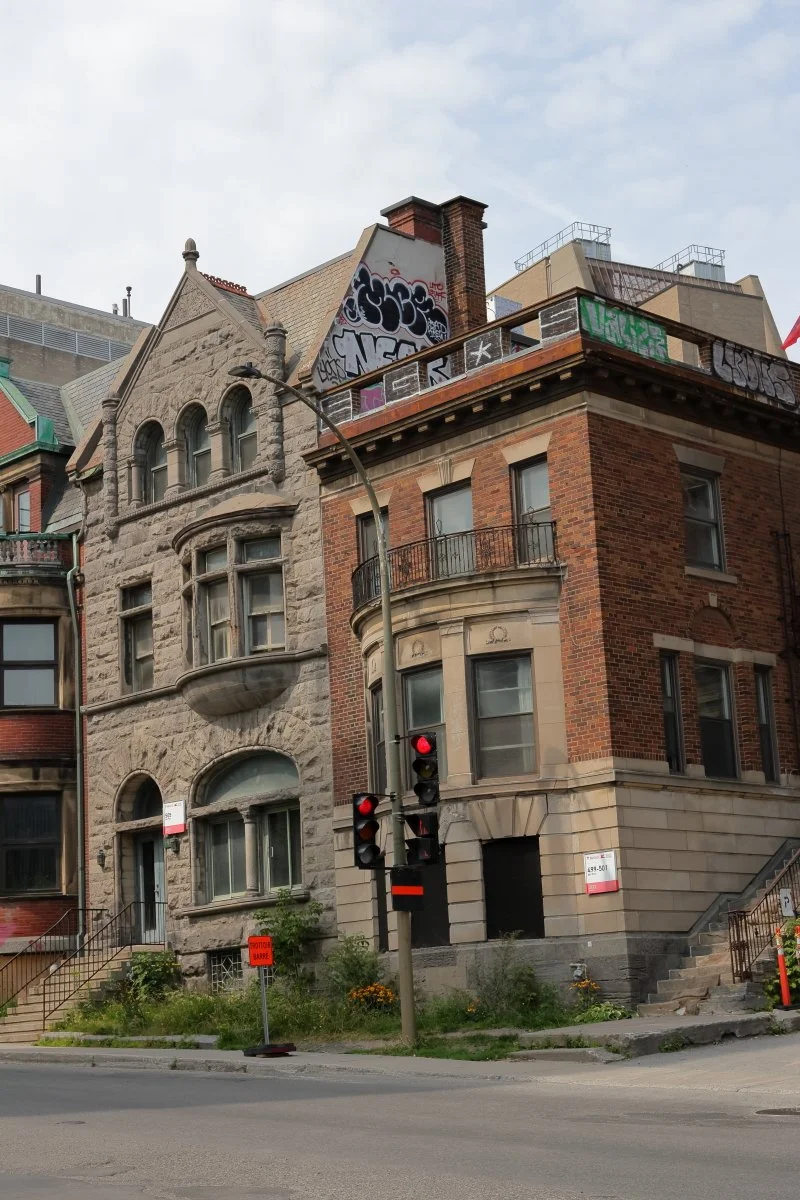
At the corner of Pine Avenue and Aylmer Street, two McGill University buildings watch over a vibrant crossroads. Graffiti, signs, streetlights: everything speaks of the constant passage of students, the proximity of the campus, and the instability of place.
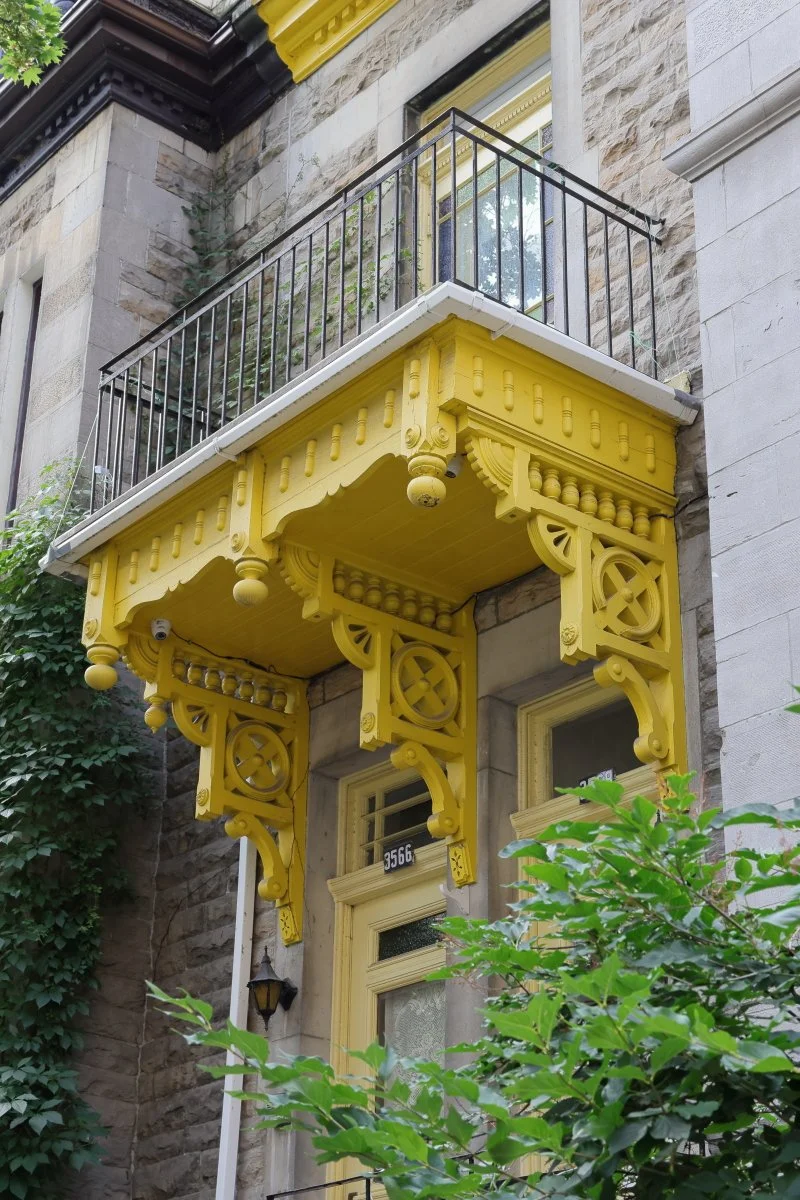
On Hutchison Street, a yellow balcony lights up the stone and recalls the days when ornament was a working-class gesture. This sculpted décor, vibrant and enduring, extends the story of those who built not only to last, but also to embellish.
Milton-Parc Today
Today, Milton-Parc is one of the rare examples in North America of a collectively managed heritage downtown neighbourhood. Far from being frozen in time, it continues to evolve through the efforts of its residents, who are committed to preserving both the built environment and the spirit of place.
Century-old houses stand alongside small neighbourhood businesses, housing cooperatives, and shared spaces. Walking through its streets, one can sense a collective memory woven into the very stones and façades.
More than a neighbourhood, Milton-Parc has become a living symbol of civic engagement, urban resistance, and love for architectural heritage.
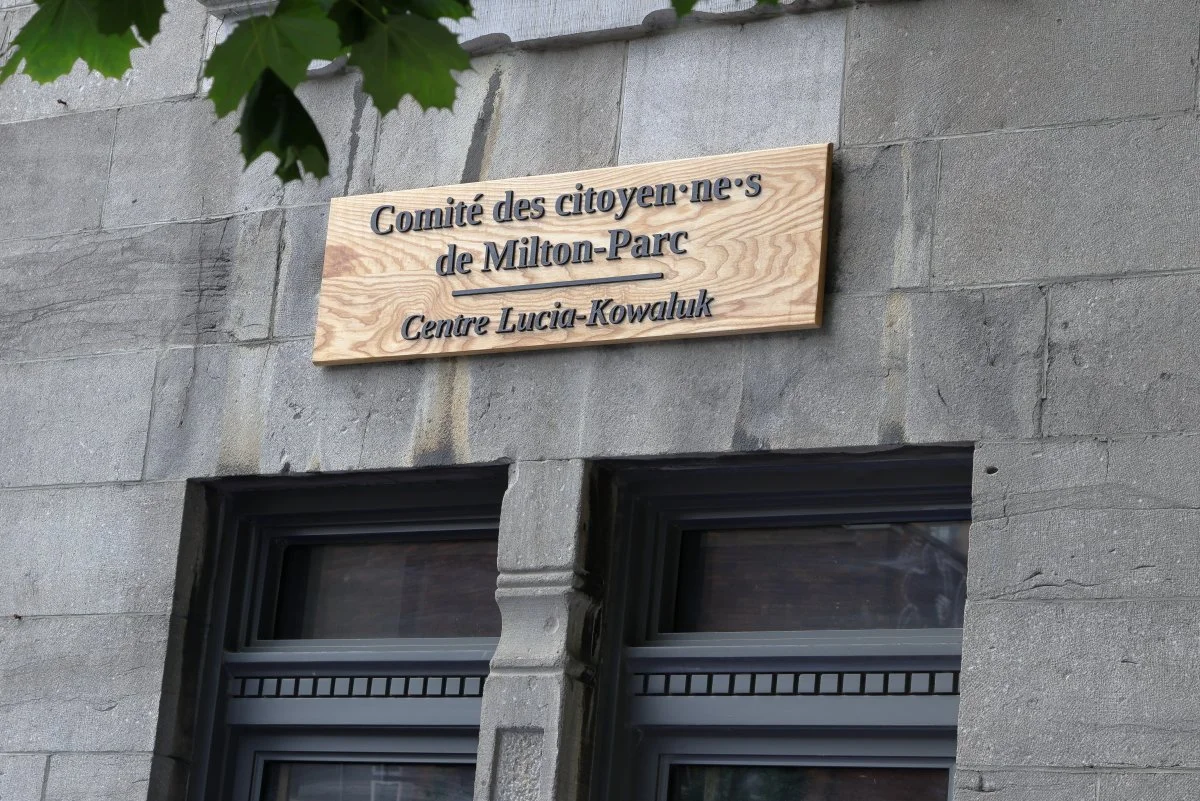
In the shadow of cornices and balconies, the struggle for the right to housing took root here. The Citizens’ Committee embodies this living history, carried by the cooperatives and the legacy of Lucia Kowaluk.