Plateau Mont-Royal History
Ancient Traces and Erased Memory
Before the arrival of French settlers, the territory of the Plateau Mont-Royal was part of lands frequented by Indigenous peoples, including the Kanien'kehà:ka (Mohawk), who used the region as a place of passage, hunting, and exchange.
These millennia-old presences have been largely erased from official narratives, yet their memory remains inscribed in the landscape, even invisibly. With the arrival of Europeans, the lands were gradually granted to religious communities.
In the 18th century, the territory of the future Plateau was essentially rural, integrated into the vast seigneury of the Sulpicians, lords of the Island of Montreal. It was not until the 19th century that the first major religious institutions appeared, such as the Institution des Sourdes-Muettes, founded by the Sisters of Providence beginning in 1863.
Urban development would only truly begin a little later, as the city expanded northward.
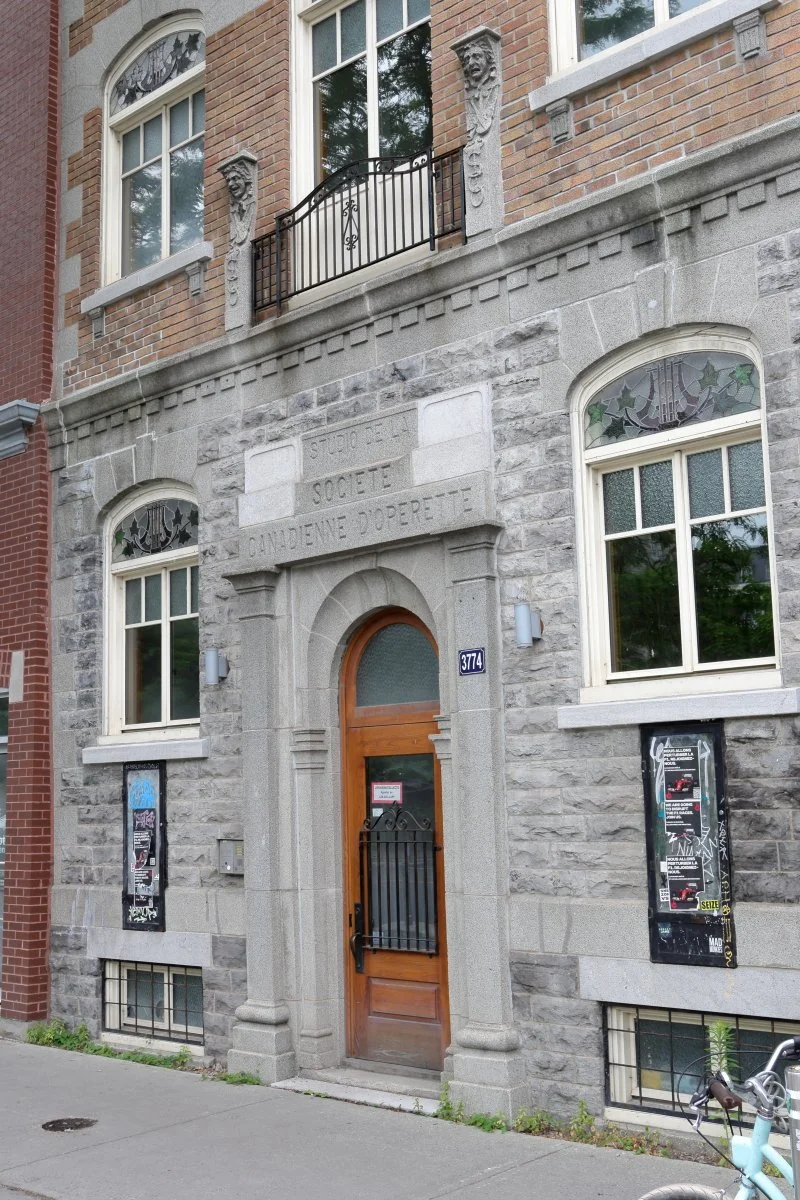
The Société canadienne d’opérette, nestled on Saint-Denis Street, recalls that the Plateau was long a place of musical creation. The sculpted details of the façade pay tribute to this vibrant heritage.
Urban Growth and the Rise of Outlying Districts
It was in the 19th century that the Plateau began its rapid urbanization. The extension of streets from downtown, the arrival of the tramway, the expansion of the railway, and the creation of parks such as La Fontaine Park gradually transformed the landscape.
Initially composed of semi-rural villages such as Côte-à-Baron, Saint-Jean-Baptiste, Coteau-Saint-Louis, and Saint-Louis-du-Mile-End, the Plateau was progressively integrated into the city of Montreal.
In its early days, the neighbourhood was home to a relatively affluent population, but this population gradually moved westward as rural migration drew a growing working-class labour force northward. This departure was accompanied by the sale of many lots and residences, opening the way for the construction of more modest housing.
This development took place within the broader context of industrialization. Land was subdivided, houses lined the streets, and new working-class neighbourhoods emerged to house a growing population.
The architecture of the Plateau — modest yet ingenious — was born out of this period of transition.
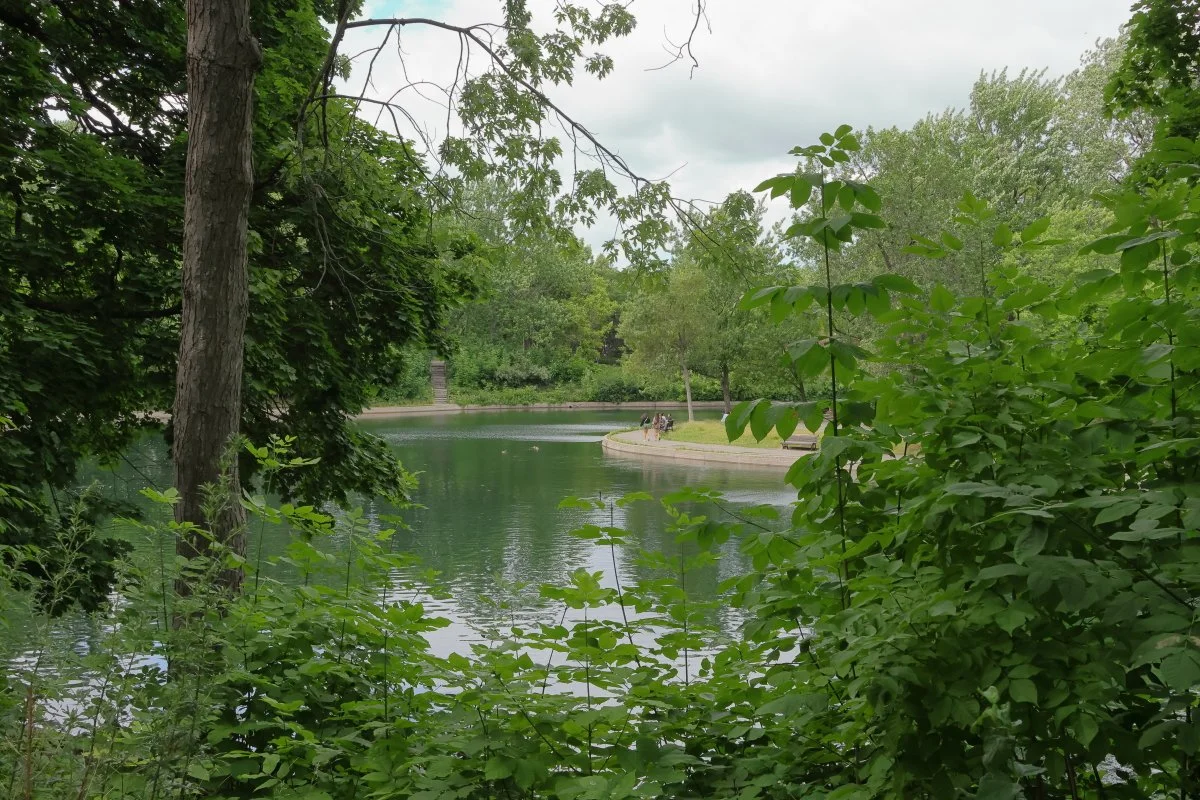
A symbol of the Plateau’s development, La Fontaine Park recalls the neighbourhood’s semi-rural origins and its gradual integration into the city.
The Working-Class and Artisanal Plateau: Lanes, Staircases, Balconies
Beginning in the 1880s, the Plateau Mont-Royal truly took shape through a tight grid of orthogonal streets, lined with typical duplexes and triplexes. Built of brick, these working-class dwellings, with their wrought-iron balconies and exterior spiral staircases, bear witness to a local craftsmanship shaped by the masons, carpenters, and blacksmiths of the period.
Behind the façades, courtyard life, lively lanes, and narrow apartments welcomed Francophone families, as well as many immigrant communities — notably Jewish, Greek, and Portuguese — who contributed to the vitality of the neighbourhood.
The Plateau became a microcosm of Montreal: dense, working-class, creative, with a domestic architecture that speaks at once of modesty, ingenuity, and rootedness.
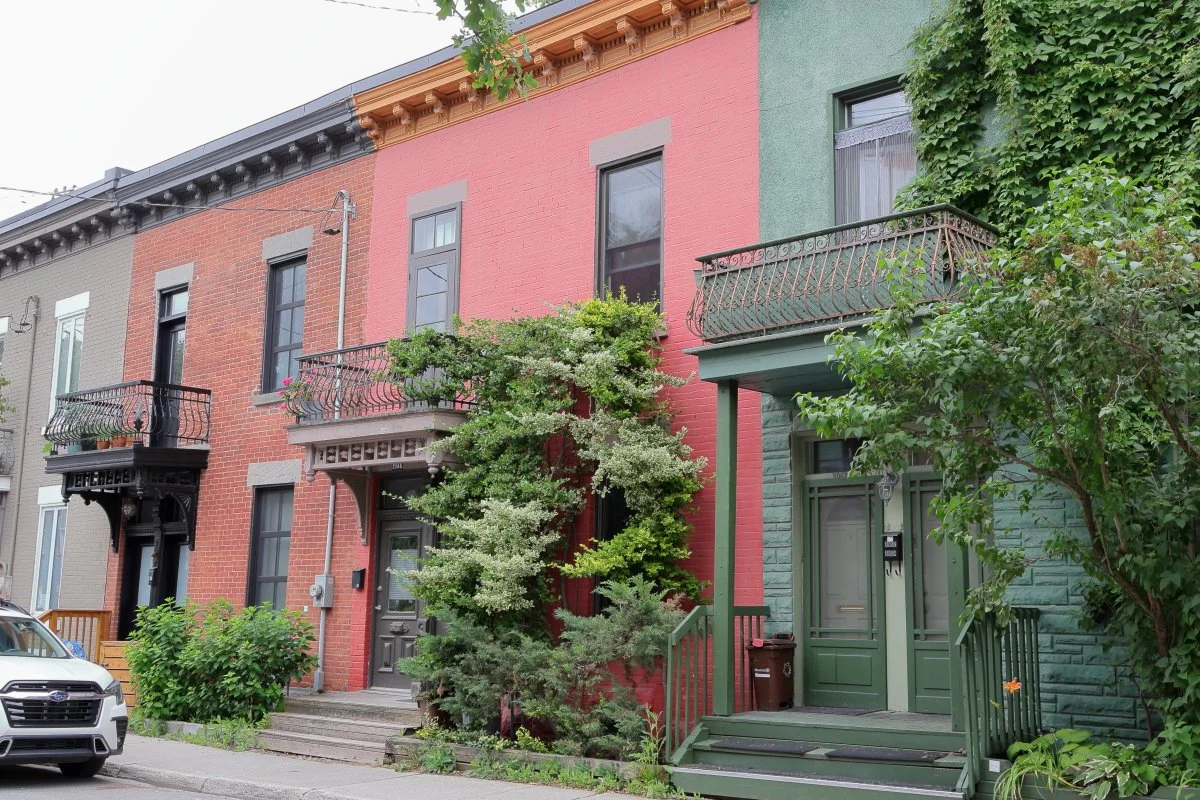
Rows of duplexes, rhythmic façades, charming dormers: here, the Plateau unfolds one of its most emblematic residential patterns, between working-class sobriety and colourful whimsy.
Henri-Julien Street, between Roy and Duluth.
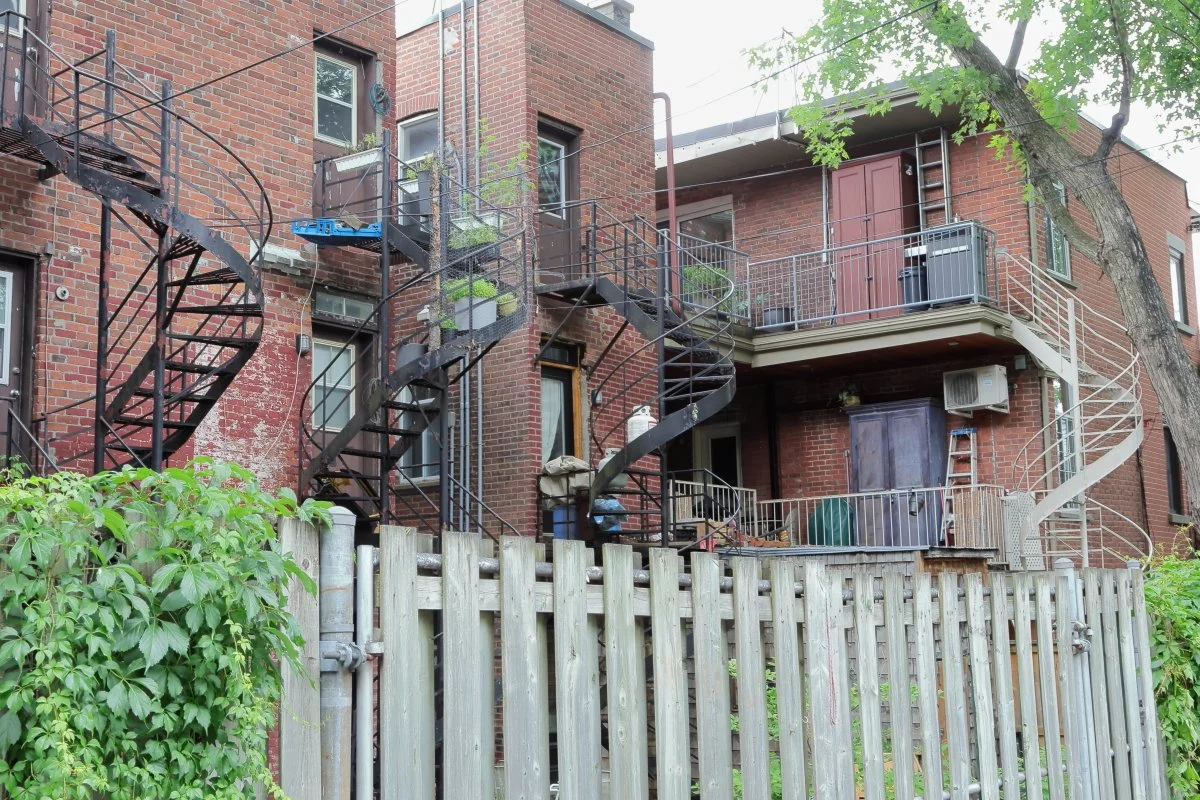
In the lanes of the Plateau, architecture becomes alive: staircases, plants, fences, and accumulated objects tell the everyday story of a Montreal that is inhabited, transformed, and adapted.
South of Duluth Street, between Saint-Christophe and Saint-André Streets.
A Neighbourhood of Artists and Urban Transformation
From the mid-20th century onward, the Plateau began to attract a new population: artists, intellectuals, students, and cultural workers settled in these affordable dwellings, often left behind as families moved to the suburbs.
The neighbourhood then became a centre of literary, musical, and political effervescence. The cafés of Mont-Royal Avenue, the bookstores of Saint-Denis Street, and the neighbourhood theatres formed a vibrant landscape, where the art of living met the art of creating.
But this vitality also brought transformations: since the 1990s, gentrification has altered the social face of the Plateau. The charm of its lanes, the beauty of its façades, and the soul of its old dwellings have attracted a new middle class, sometimes at the expense of the original families and artisans.
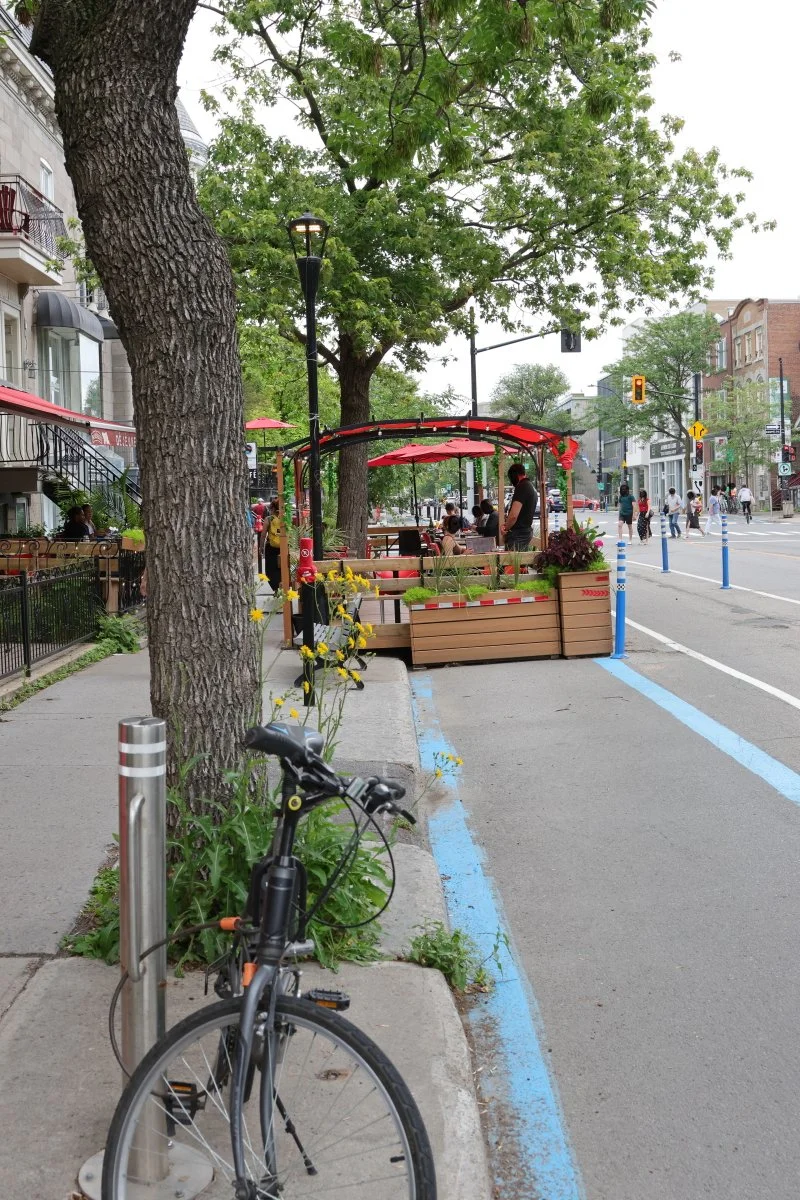
Flower-filled terrace on Saint-Denis Street. One of the Plateau’s countless cafés where the city is listened to, observed, and lived.
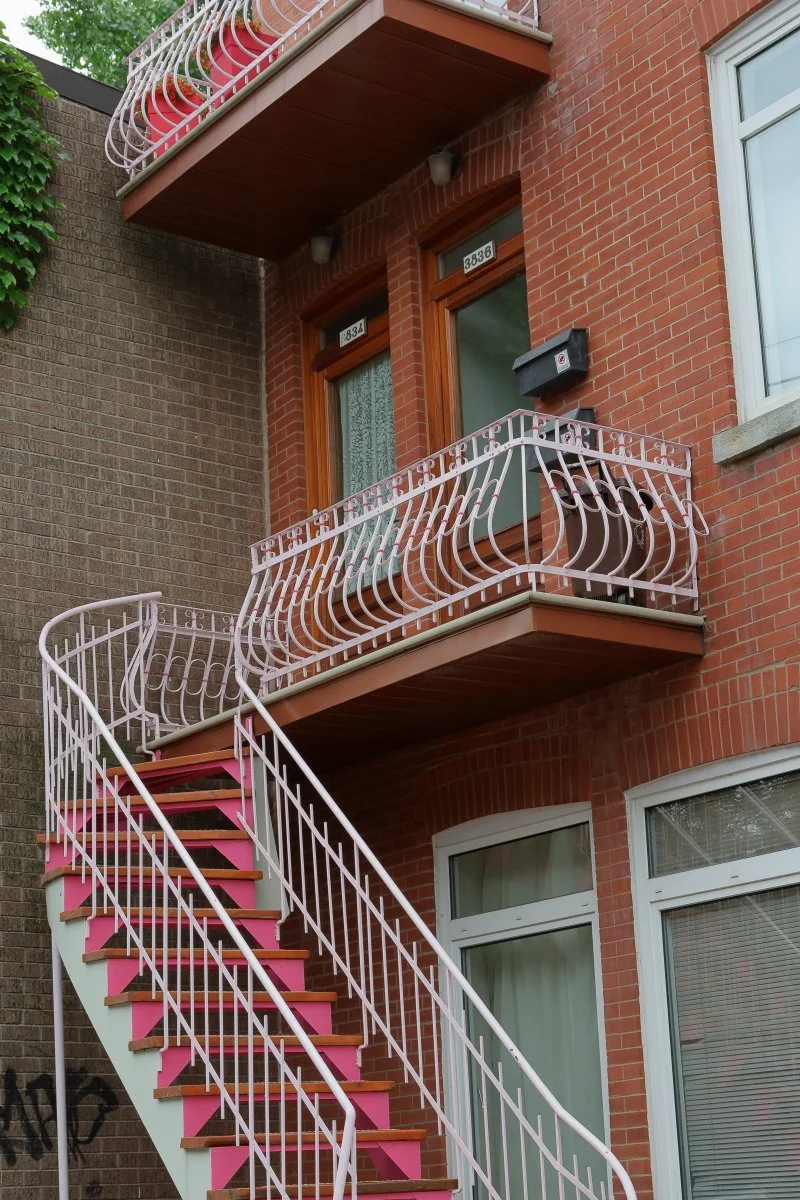
On brick walls, a pink staircase tells the story of a neighbourhood’s metamorphoses, transformed into a ground for expression and urban reinvention.
Drolet Street, north of Roy Street.
An Everyday Heritage to Preserve
The Plateau Mont-Royal cannot be reduced to its tourist clichés. Behind its pastel-coloured façades, spiral staircases, and weathered brick walls, an entire urban way of life is expressed — one made of proximity, light, and memory.
For those who take the time to walk slowly, the neighbourhood’s architecture reveals a discreet poetry: an old sculpted porch, an antique stained-glass window, a finely crafted wooden balcony.
As a photographer, I wanted to capture these ordinary yet singular details, which bear witness to a time when each house told a story. To document this heritage is, for me, a way of honouring the gestures of the past, while awakening awareness of the risks of gradual erasure.
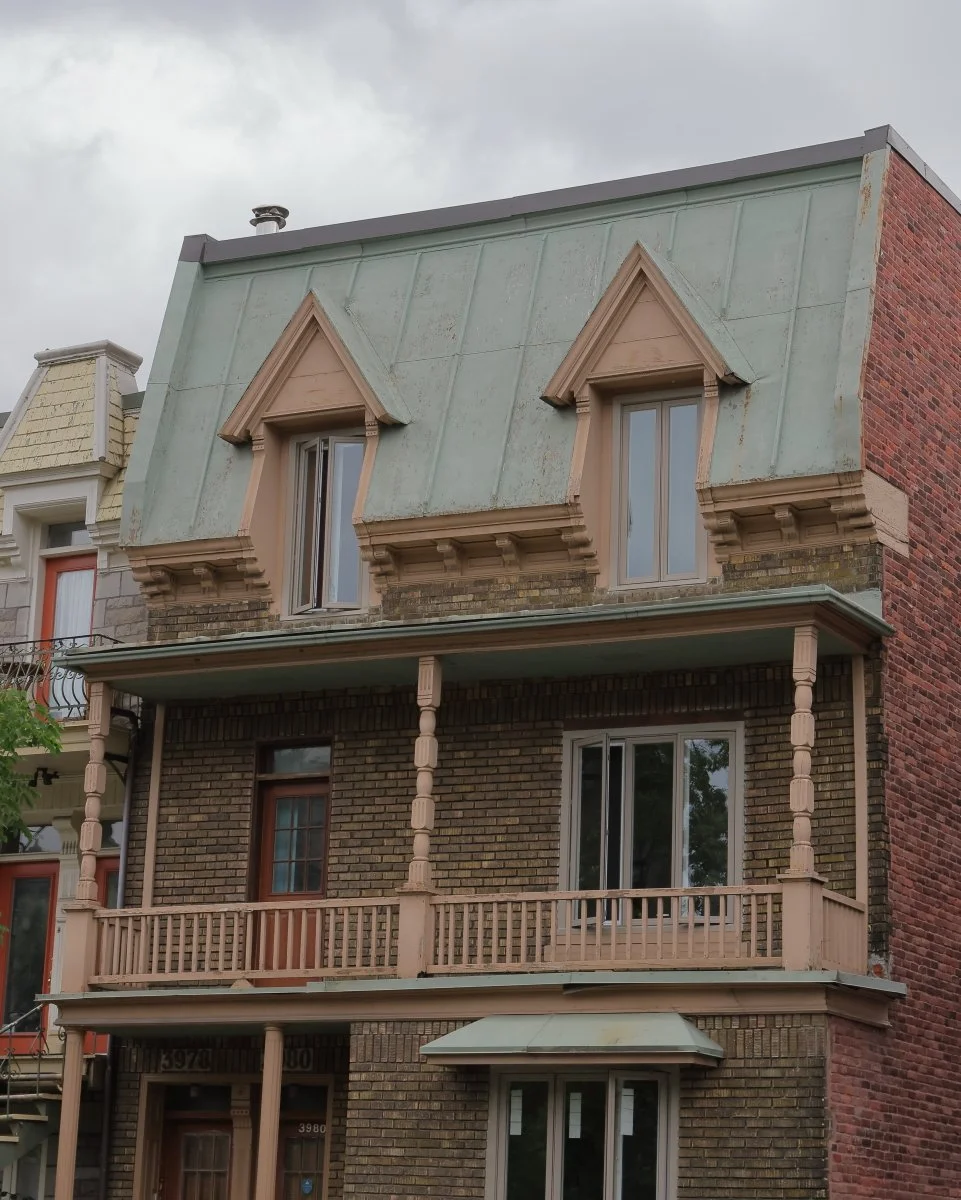
Beneath its cloak of brick and its sheet-metal crown, this century-old house whispers the stories of a neighbourhood shaped by the hand of the artisan. Every detail, from the turned balcony to the triangular dormer, tells a silent memory.
Saint-Hubert Street, south of Duluth Street.